How we farm.
Nicolau Estate is a biodynamic, closed-loop farm at Severnlea, on Queensland's Granite Belt. We don't farm the way most farms farm. There's no synthetic input on the property — no herbicide, no pesticide, no synthetic fertiliser. The soil feeds the vines. The animals feed the soil. The harvest comes from both.
The soil runs
the whole farm.
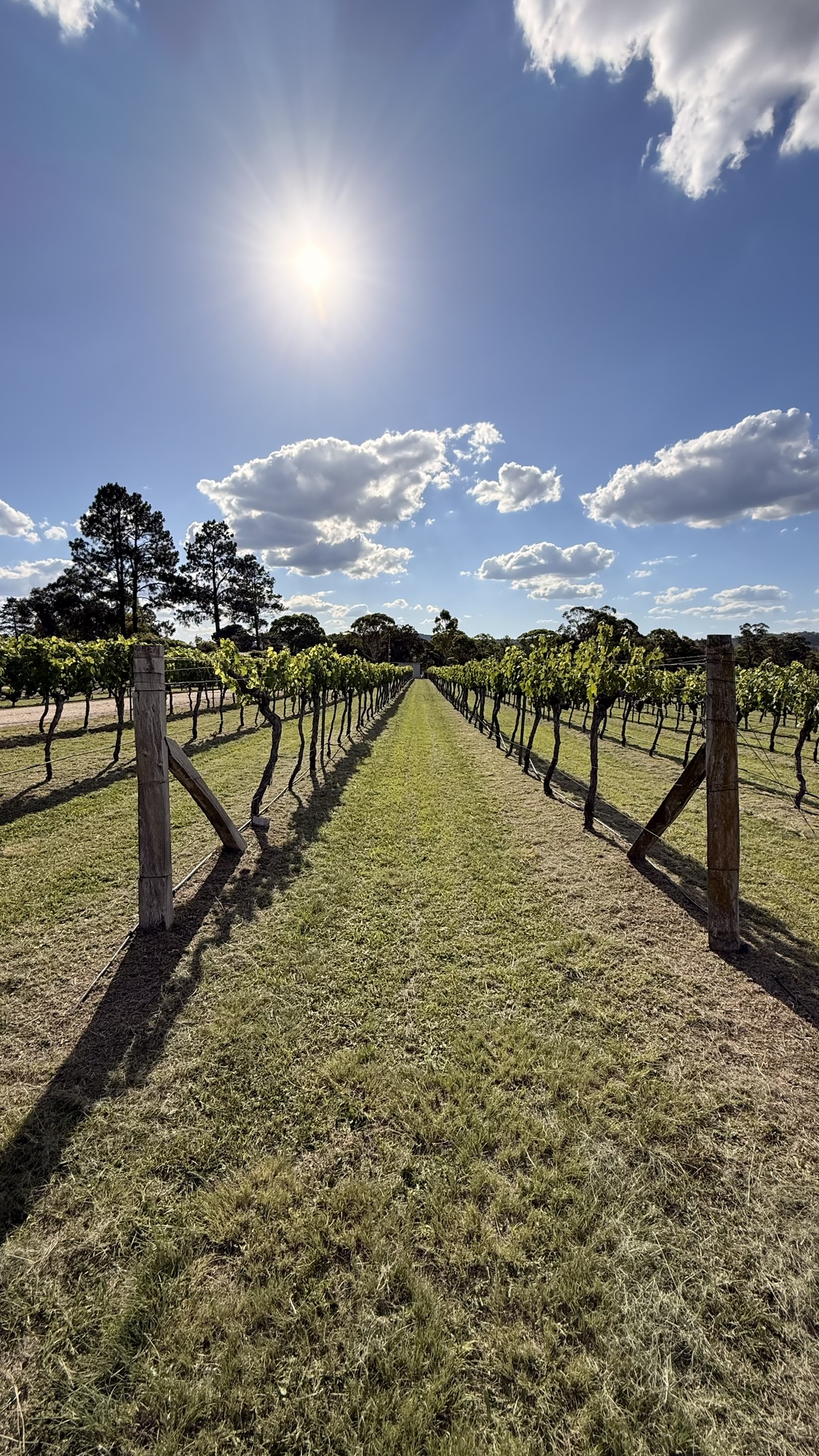
The Granite Belt soil is pale, free-draining decomposed granite, slightly acidic, low in organic matter — the kind of soil that produces concentrated, mineral-driven wines when it's managed well, and produces thin, tired vines when it's not. The difference comes down to what we put back into it.
Nicolau Estate was first certified organic through Australian Certified Organic, and the operation is now in conversion toward Demeter biodynamic certification. The conversion isn't aesthetic. It's a structural change to how the vineyard, kitchen garden, and animal system are managed as a single farm organism.
Above all, the soil is treated as a living system: cover crops between every vine row, compost applied annually, no chemical herbicide and no synthetic fertiliser. The soil is fed first; the vines are a consequence.
Closed-Loop Inputs
Nothing synthetic. Compost, cover-crop residue, and animal manure from the property.
Cover Crops
Legume + cereal mixes sown every autumn, turned back into the soil pre-vintage.
Annual Compost
20+ tonnes of biodynamic compost applied across the vineyard rows each year.
Certified Organic
Australian Certified Organic. Demeter biodynamic conversion in progress.
Eighteen months
from paddock to vine.
The compost cycle at Nicolau Estate is the literal mechanism that closes the loop. Manure and bedding from the hen house and livestock paddocks are layered with straw, garden waste, and vine prunings, then turned four times across eighteen months. The finished compost goes back onto the vineyard rows. Inputs on this farm are grown on this farm — that's the rule.
Layered Windrows
Manure, straw, garden waste, and chipped vine prunings layered into 1.5m windrows on the compost pad.
Temperature Cycle
Windrows reach thermophilic temperatures in the active phase. The heat kills pathogens and weed seed; biodynamic preparations are applied to support the microbial cycle.
Four Turns
The pile is mechanically turned four times across twelve months, with moisture and oxygen monitored weekly.
Mature Compost
After 18 months the compost is dark, sweet-smelling, and stable. Spread across the vineyard rows in early spring before budburst.
Welfare first.
Ecological role second.
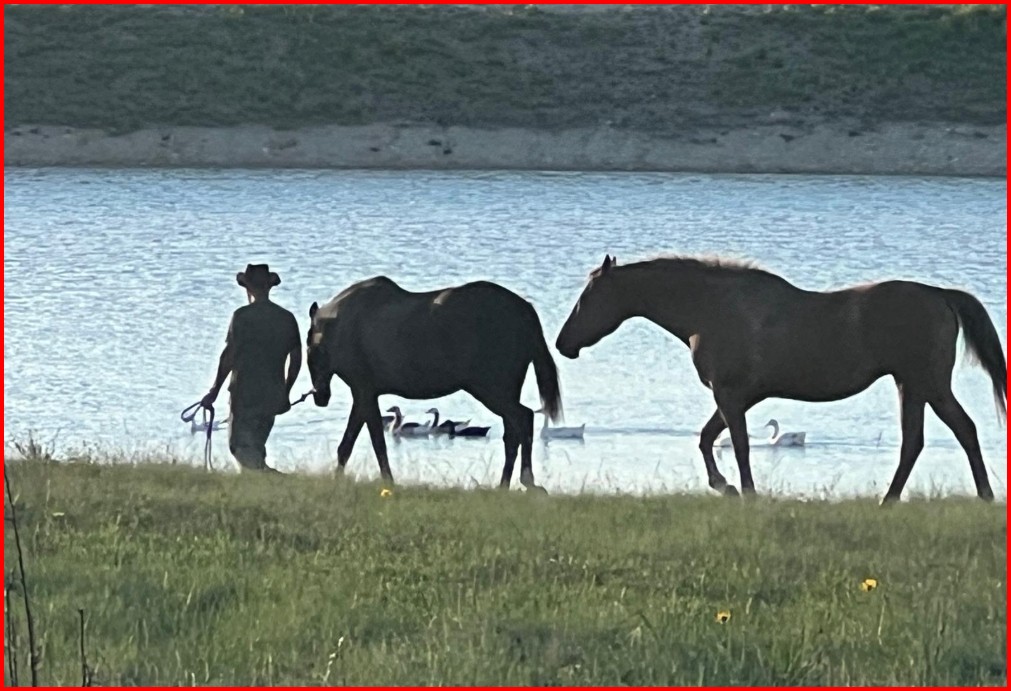
The animals at Nicolau Estate are not a side feature. They're the mechanism that converts pasture into compost, animates the soil microbial community, and closes the nutrient cycle. Without the animals, the soil work doesn't happen. Each species is chosen for a specific role on the property.
Free-Range Flock
Eggs & Orchard SanitationThe hen flock runs free-range across the orchard and kitchen garden. The birds convert kitchen scraps and insect pests into manure, and clean up fallen fruit before fruit-fly cycles can establish. Guests collect their own eggs in the morning.
Rotational Grazers
Pasture-Blooded StockThe cattle and sheep at Nicolau Estate move across set-stocked pasture cells on a planned rotational cycle rather than grazing continuously. Stocking density is matched to pasture growth rate, not the other way around — animals come off a cell the moment growth slows, and that cell rests.
On-Site Processing
Micro AbattoirA small on-farm abattoir handles beef, lamb, and pork. By keeping processing on the property, the farm keeps a clear and honest connection between the land, the animals, and the table — nothing moves off-site as a live animal, and nothing leaves the farm that isn't replaced.
Moving the animals
is the core practice.
Continuous grazing — animals left on the same paddock for weeks at a time — degrades pasture: the most palatable species are eaten too low to recover, bare patches open up, weeds take the empty space, and the soil loses both ground cover and root structure.
Rotational grazing inverts that. Stock is concentrated in a small cell for a short window, then moved on. The paddock then receives a long rest — long enough for the plants to recover to a full root depth before they're grazed again. The trampled residue is worked into the soil surface by worm and insect activity, not lost to over-grazing.
That's why the animals move daily and the cells rest in between. It's the same reason the compost gets applied annually, and the cover crop gets turned in pre-vintage. The practice runs on the soil's clock, not the operation's.
Four seasons.
What changes at the farm.
The farm doesn't look the same week to week. Each season shifts what we're doing — pruning the vines, turning compost, lambing, vintage, cover-crop turn-in. If you stay long enough, you'll see the cycle in motion; even a long weekend will catch two or three seasons overlapping.
Spring
Vine shoots emerging, cover crop in full flower, first lambs on pasture, compost application to vineyard blocks. The orchard blossoms from late September; the chooks start laying hard again.
Summer
Canopy management, irrigation decisions, vegetable production at peak, sour cherries and berries in fruit. The kitchen garden is the busiest it's been all year; the hens are laying at full rate.
Autumn · Vintage
Vintage. Varieties ripen in sequence — Vermentino first, Chardonnay and Rosé mid-season, Shiraz and Malbec last. Ferments run in the winery; the cellar door opens in the cool of the evening.
Winter
Vines are dormant, pruning starts in July, compost windrows are turned and built for the spring application. The animals stay on pasture; the cover crop protects the soil through the coldest months.
You don't visit
the same farm twice.
The farm looks materially different at different points in the season. In late winter, the vineyard is bare canes and the cover crop is doing its work. By mid-summer, the canopy is a wall of green and the kitchen garden is over-producing. Vintage in March turns the property into a working winery — grapes coming in, ferments bubbling, the smell of harvest across the whole valley.
A two-night stay is two seasons overlapping — you arrive as the lambs are finishing and leave as the early shoots are pushing. A week-long stay walks you through the full weekly cycle and catches at least one significant change at the farm. The cellar door pours different wines in March than in August.
That's why guests come back. The farm you arrive at is not the farm you remember from the last visit — and that's intentional.
Certification & the rule of no synthetic inputs
Nicolau Estate is certified organic through Australian Certified Organic, with Demeter biodynamic conversion in progress. No herbicide. No synthetic pesticide. No synthetic fertiliser. What goes into the soil is grown on the property — compost, cover crop residue, animal manure, and the biodynamic preparations. The certification covers the vineyard, the kitchen garden, and the animal system as a single integrated unit.
Organic · Demeter
conversion in progress
Experience the farm,
not the brochure.
Stay in a cottage. Walk the vineyard rows at dawn. Collect your own eggs. Watch the season turn.