Food that starts
in the soil.
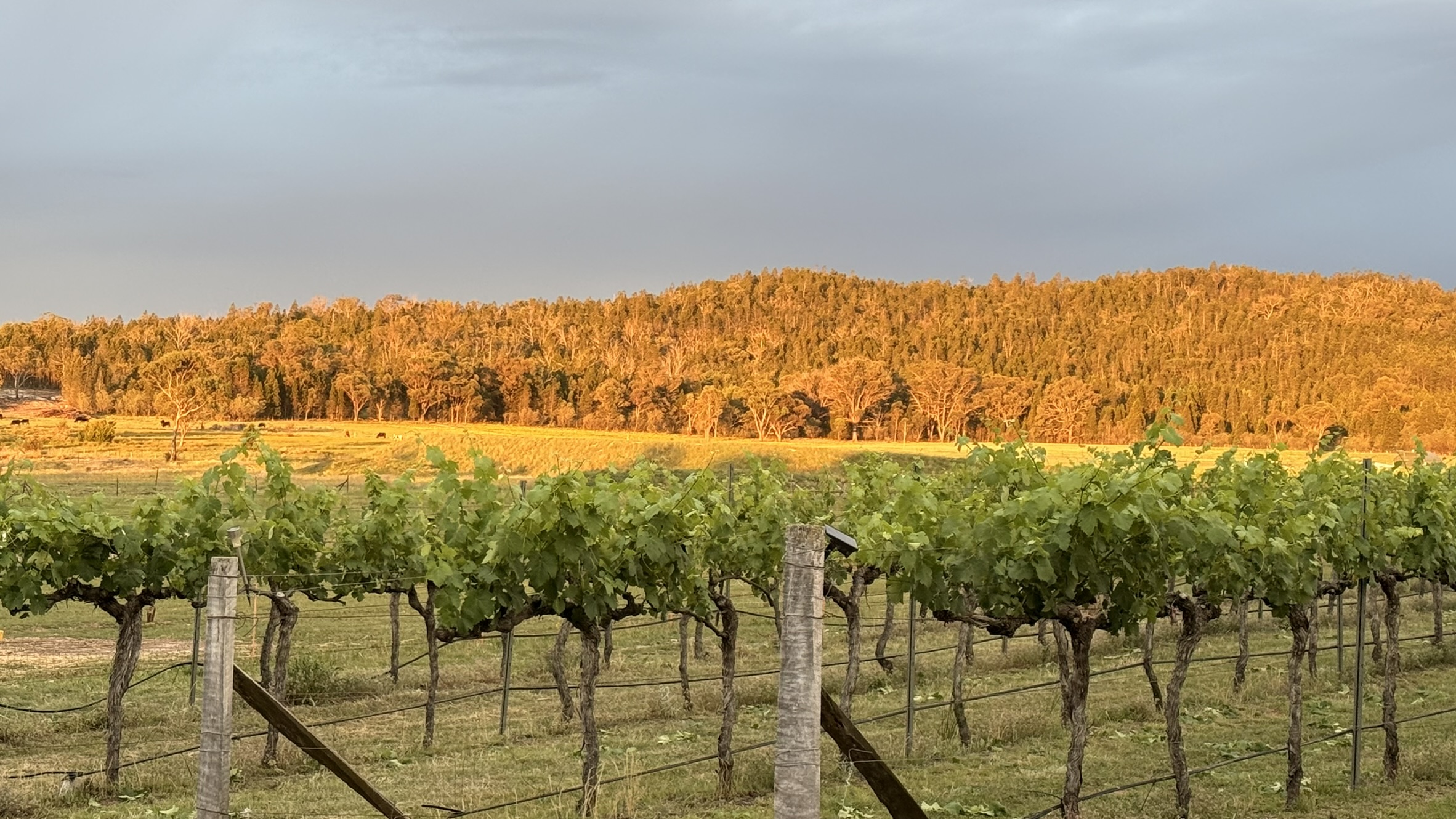
Seasonal menus built from what the biodynamic farm grows each week. Estate wines paired by the winemaker. Vineyard setting, 800 metres above the Granite Belt.
From the farm,
to the vineyard,
to your table.
Nicolau Estate's restaurant operates on a simple principle: the menu is written by the season, not the other way around. Whatever the kitchen received from the farm that morning determines what's on the table that evening.
No procurement lists, no substitute ingredients. The farm grows what it grows, and the kitchen works with what's available. Some weeks there's more. Some weeks there's less. That's the point.
Biodynamic Produce
All vegetables, herbs, and fruit come from Demeter-converting biodynamic growing.
On-Farm Sourcing
Eggs, poultry, and meat from animals raised on the property's micro abattoir.
Zero-Kilometre
Most ingredients travel less than 200m from harvest to your plate.
Seasonal Menus
Menus change weekly, sometimes mid-week, as the harvest dictates.
Farming as
a discipline,
not a label.
Biodynamic farming at Nicolau Estate is not a marketing claim. It shapes the planting calendar, the composting process, the movement of animals across the land, and the decision of what to grow and when.
The restaurant is an extension of that practice. Every plate that goes out the door represents a decision that started months earlier — in the soil, in the vineyard, in the decisions about what the land could sustain this season.
This approach limits what the kitchen can do. It also means the food tastes the way it does because the land made it that way.
Closed-Loop Soil Fertility
Compost from the kitchen goes back to the garden. Animal manures go to the compost. The farm is treated as a self-sustaining system — nothing leaves that isn't replaced.
Animal Welfare as Baseline
Livestock are not a byproduct of the farming system — they're integral to it. The micro abattoir on the property handles processing on-site, with welfare standards exceeding regulatory requirements.
Vineyard as Ecosystem
The vineyard rows are not monoculture. Cover crops, native plantings, and beneficial insect habitats are integrated throughout. The result is a biological complexity in the fruit that sterile rows can't replicate.
No Synthetic Inputs, Ever
No synthetic pesticides, herbicides, or fertilizers. The soil biology is the production system — healthy soil produces healthy plants, healthy plants produce healthy food.
The restaurant
is coming.
QLD restaurant licensing research is complete. The Nicolau Estate farm-to-table restaurant is confirmed viable and on track. Sign up to be notified when we open — and to get first access to reservations.
Be first to book.
Join the waitlist and we'll notify you the moment the restaurant opens. No spam — just one email when we launch.
Estate wines,
selected by the winemaker.
The Nicolau label spans four varieties — all grown on the property's biodynamic vineyard at 800 metres. Each wine reflects the season that made it. Ask your server about current pairings — the winemaker chooses them based on what the kitchen is doing this week.
With the garden
Wild-ferment, oak-influenced Chardonnay from the estate's oldest block. Good depth and natural acidity that cuts through rich vegetable dishes — root vegetable gratins, spring pea risotto, slow-roasted tomatoes.
With the paddock
Granite Belt Malbec, medium-bodied, plum and violet on the nose with a graphite finish. Designed for the farm's beef and lamb — the tannin structure handles protein-rich dishes without overpowering the subtle complexity of biodynamic-reared meat.
With the cellar door selection
Franc de Pied — whole-berry, indigenous yeast, no additions. This is the estate's most contemplative wine — black pepper, dark fruit, fine tannins. Pairs with everything on the menu; the winemaker's favourite with slow-cooked goat or braised lamb shoulder.
The farm is already producing.
The restaurant is almost here.
Until the restaurant opens, stay at Nicolau Estate and experience the farm directly — collect eggs for breakfast, walk the vineyard rows, and have a private harvest dinner arranged for stays of two nights or more.